
Let It Be Asked
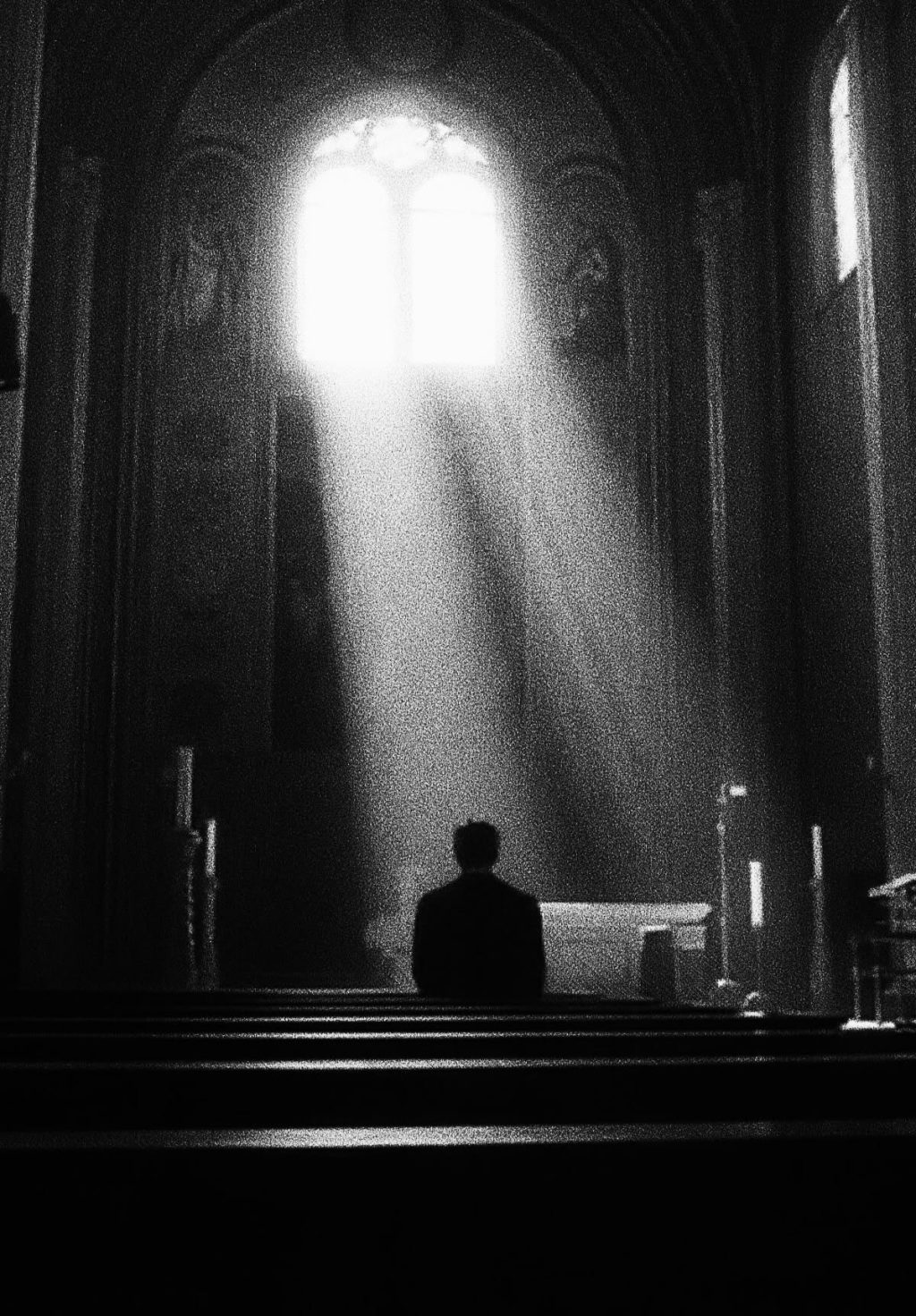
There is a peculiar human tendency to believe that understanding something gives us the right to interpret it for everyone else. We do it with people’s choices, their silences, their relationships, their grief, their hopes and, quite often, their faith. We hear a fraction of a story and somehow feel equipped to comment on the entirety of it. Perhaps the most overlooked consequence of this tendency is how casually we sometimes interfere with things that were never ours to begin with.
Prayer is one such thing.
It is difficult to explain the entirety of a person’s relationship with God, largely because so much of it exists beyond the reach of another human being. There are conversations that have never been spoken aloud, questions that have remained unanswered for years, feelings that have no proper names and thoughts that would probably sound entirely different if they were ever put into words. There are things people carry into prayer that they have never trusted another person enough to share.
Yet, somehow, people have become remarkably comfortable telling others what they should and should not take to God.
A person mentions praying for a particular outcome, and the response is immediate. Don’t pray for that. Don’t ask for that. Don’t wish for something like that. Perhaps you should be praying for something else.
Sometimes, the objection concerns a particular person. Sometimes, it is a decision, an opportunity, a change in circumstances, a hope for the future or something that someone desperately wants to be different. At other times, it has nothing to do with receiving anything at all. It might be a prayer for understanding, for forgiveness, for someone’s well-being, for the strength to endure a difficult situation, for the restoration of something that has been lost, or simply for the ability to make peace with something that cannot be changed.
Whatever the subject, there always seems to be someone who believes the prayer would be better directed elsewhere.
But why?
When did the contents of another person’s prayers become a matter for public interpretation?
Perhaps the problem lies in how narrowly prayer is sometimes understood. It is treated as though it must always be a request for something desirable, something morally uncomplicated, something that everyone would agree is worth asking for. But human beings are considerably more complicated than that.
Not every prayer comes from a place of certainty. Some come from confusion. Some from an inability to understand why something happened. Some from regret, resentment, fear, helplessness or an attachment that has not yet found its way to acceptance. Some are prayers for things that cannot be undone. Some are for people who have caused hurt. Some are for circumstances that others might consider insignificant. And some are simply attempts to make sense of being human.
Not every prayer is an expression of what someone believes should happen. Sometimes, it is an expression of what someone wishes would happen, even while knowing that the outcome is beyond their control.
There is a distinction worth making here. Asking is not demanding. Hoping is not insisting. Wanting something does not automatically mean believing it is owed. A person can ask for a particular outcome and still recognise that the answer may be different. A person can pray for something with complete sincerity without assuming that personal wishes must take precedence over divine wisdom.
The existence of a request does not necessarily imply an absence of surrender.
And perhaps this is where the conversation about faith deserves a little more thought. Trusting God should not require a person to arrive before Him with an edited version of their own heart. There is something rather contradictory about suggesting that a person must first stop wanting something before they are allowed to bring it into prayer. If every feeling must be resolved before it can be expressed, what becomes of the honesty that makes prayer so personal in the first place?
There is also a difference between offering someone spiritual guidance and taking it upon oneself to regulate their faith. The former can be an act of kindness. The latter can become an intrusion, however well-intentioned it may be.
Consider the familiar response, ‘God has something better planned.’
It is a sentiment that can offer considerable comfort. But its meaning changes when it is used to dismiss someone’s feelings rather than comfort them. Sometimes, people are not looking for an alternative explanation, a prediction of what lies ahead or a reminder that their wishes might not come true. They are simply expressing something that matters to them.
Not every expression of hope requires correction. And not every conversation about faith needs to become an opportunity to demonstrate whose understanding of it is more appropriate.
There is an extraordinary amount that remains unknown about another person’s circumstances. What appears unnecessary from the outside may have years of meaning behind it. What seems like an unreasonable request may be connected to an experience that has never been shared. What appears to be an inability to let go may actually be part of a much longer process of understanding, acceptance and growth.
People are not obligated to make the entire history of their hearts available for examination before their prayers can be respected.
Of course, this is not to suggest that every desire is right simply because it is sincerely felt, or that reflection and spiritual guidance have no place in one’s life. Faith can challenge, correct and transform. There is value in questioning one’s intentions and examining what one asks for. But such reflection is profoundly different from allowing other people to decide what someone else is permitted to bring before God.
The distinction matters.
There is also something worth considering about the assumption that a person who prays for something specific must somehow have misunderstood faith. Why is a particular request so readily interpreted as an unwillingness to accept God’s will? Why is the act of asking sometimes treated as though it diminishes the act of trusting?
Perhaps human beings are allowed to exist somewhere between what they want and what they understand. Perhaps faith does not demand that every personal preference disappear. Perhaps there is room to acknowledge the limits of human understanding while still expressing the very human desire for things to turn out a certain way.
And perhaps the most important part is that nobody else needs to resolve that tension on another person’s behalf.
A prayer is not a declaration that the person praying possesses complete wisdom. It is not a claim to know the future, an insistence that life must follow a particular arrangement or a statement that every personal desire is justified. It is an act of turning towards God with whatever occupies the heart and mind at that moment.
Sometimes that means gratitude. Sometimes it means asking. Sometimes it means questioning. Sometimes it means bringing something before Him that has no immediate solution and no clear conclusion.
The fact that another person might not understand the reason behind a particular prayer does not make that prayer any less personal.
And this is precisely why the casual policing of other people’s prayers deserves to be reconsidered. There is already so much about human existence that cannot be fully communicated. There are private struggles that remain private, emotions that resist explanation and experiences that cannot be measured by the few sentences through which they are described. Prayer is one of the few places where none of this needs to be made comprehensible to an audience.
It does not need to be translated into something more acceptable. It does not need to be defended against every disagreement. And it certainly does not need to pass through the approval of those who happen to overhear it.
Perhaps a little humility is necessary here. Not just humility before God, but humility before the fact that other people have entire inner worlds that will never be fully accessible to us. Their faith, their understanding, their struggles and their conversations with God are not things that can be adequately judged from a passing remark.
The next time someone speaks about what they have been praying for, perhaps the response need not be an instruction about what they should pray for instead. Perhaps it is enough to recognize that there are parts of another person’s relationship with God in which the rest of the world has no particular role to play.
There is a difference between having an opinion about someone’s prayer and having a place in it. The first comes easily to almost anyone. The second is not ours to claim.
And perhaps that is where the boundary ought to remain.